Halloween: Spooky or Sexy?
Every year, as October rolls around and the pumpkins appear across both porches and social media alike, a strange metamorphosis happens: cobwebs and candy share shelf space with corsets and fishnets. Somewhere between the trick and the treat, Halloween became the unofficial night of collective kink and socially sanctioned flirtation with darkness, danger, and desire.
It kind of makes sense… Halloween has always been a threshold, a sort of liminal portal between the seen and unseen, the respectable and the forbidden. In its earliest form, Samhain marked the moment when the veil between worlds thinned and spirits wandered freely. People wore masks to confuse the ghosts and performed rituals to protect the living from the dead.
Over centuries, those rituals layered with Christian, folkloric, and eventually commercial interpretations until All Hallows’ Eve became less about communing with the dead and more about playing with the idea of being someone, or something, else.
While Halloween is often seen through an American lens, in Australia it’s still a relatively new to the culture and growing fast. What was once dismissed as “too American” is slowly shapeshifting into a playful excuse for both kids and adults to dress up, decorate, and explore a different kind of permission.
Somewhere along the way, the night of spirits and scarecrows became a night of stilettos and strategically torn fishnets. The monsters got hotter, the ghosts flirtier, and the costumes smaller.
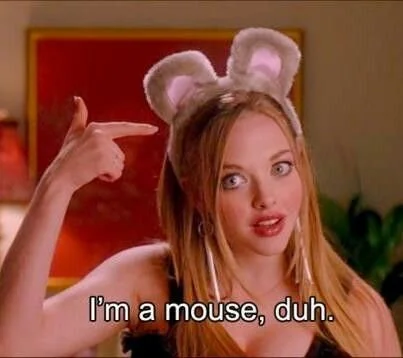
Lingerie and ears does not a mouse make… or does it?
From a psychological and somatic lens, it tracks. Halloween offers what psychologists call ‘safe fear’, a rush of adrenaline that flirts with danger but within the container of consent. The body doesn’t always distinguish between fear and arousal; both are heightened states that quicken the heart, shallow the breath, and sharpen the senses. Fear, flirtation, and fantasy share the same physiological roots.
Literal and figurative masks play a big piece here too. The moment we put one on something loosens. We have an excuse to slip out of the rigid self-image that tethers us to “who we’re supposed to be” and play with something else a little more bold, monstrous, erotic, androgynous, absurd... (take your pick). The disguise gives permission to experiment; paradox is delicious: in hiding, we feel more free to reveal.
Halloween has become not just a commercial endeavour, but a ritual in suspension of everyday identity and fertile ground for all kinds of transgression. No wonder it’s become one of the most erotically charged nights of the year.
This cultural evolution didn’t stop at liberation, the balance tipped over time and rather than the spooky fading it came to a place of holding hands on the sexy centre stage. So why is this? Well:
Capitalism loves cleavage. Retailers follow profit margins, and sexy sells.
We live in an age of constant sexual imagery. The line between seduction and parody has blurred, and the aesthetic of desire bleeds into everything from horror films to Halloween displays.
And maybe, when daily life is full of repression and respectability politics, a night of sanctioned rule-breaking feels like a kind of relief.
Of course, it’s not all empowerment and agency. Research comparing men’s and women’s costumes found women’s are consistently more revealing tighter, shorter, and designed for the gaze. And when women wear them, both men and women are more likely to objectify them. The male gaze doesn’t disappear just because it’s wrapped in a devil tail and glitte⁷.
So yes, the spooky has been partly sacrificed to the sexy, but it’s not as simple as “sexualised equals bad.” For some, wearing a risqué costume is a radical act of reclamation, a collapsing of shame, a night of embodied permission. For others, it’s a more coercive social expectation masquerading as freedom. Somewhere in the middle we’re both enjoying the power and negotiating its gaze at the same time.
Still, there’s something profoundly human in all this. To want to play, to hide, to reveal, to be desired and afraid all at once it’s part of our erotic nature, Halloween just gives us a stage to try it on without the usual consequences.
The invitation now isn’t to abandon the sexy aspect altogether, rather, to evolve it. To let it be more feral than polished, more mythic than mass-produced; to explore erotic horror where seduction and terror entwine, and the danger is part of the thrill; to choose costumes that carry story, not stereotype.
There is an opportunity here to explore the erotic masks we wear as something symbolic: a portal to an aspect of self that only emerges when the lights dim and the veil thins, and ask how we integrate that more than one month or one night of the year.
Ask yourself: what part of me am I summoning tonight and am I willing to meet her, even after the mask comes off?
If this piece stirred something in you contact me here to explore more of my work on sacred sexuality, somatic practice, and erotic self-expression. Halloween is just one door; there are many others waiting.
